Matt Meyer and the International Peace Research Association
Nominated for the Nobel Peace Prize
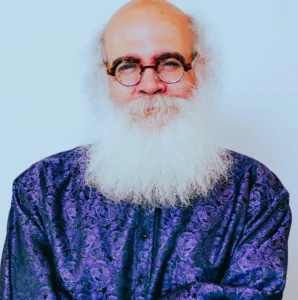
The Fellowship of Reconciliation-USA, War Resisters League, and the AJ Muste Foundation for Peace and Justice proudly celebrate the Nobel Peace Prize nomination of Matt Meyer and the International Peace Research Association (IPRA). This nomination recognizes Meyer’s decades-long leadership in resistance and liberation, his substantial scholarly contributions to peace and nonviolence studies, and IPRA’s sustained work to expand peace education across the globe.
Meyer and IPRA’s nomination was initiated by two Nobel Peace Prize laureates—Mairead Corrigan Maguire (leader of Peace People in Northern Ireland) and Adolfo Pérez Esquivel (Argentine human-rights activist, former political prisoner, and founder of Servicio Paz y Justicia)—and endorsed by eleven additional distinguished leaders, including former heads of state, government ministers, and other Nobel laureates. Their support underscores the global respect for Meyer’s moral clarity, intellectual rigor, and practical impact.
Meyer’s scholarly record is extraordinary: hundreds of articles and more than a dozen books that have shaped contemporary peace research. His early, influential work—Guns and Gandhi in Africa: Pan-African Insights on Nonviolence, Armed Struggle, and Liberation (co-authored with Bill Sutherland)—remains a landmark text, bridging theory and lived struggles for freedom. Beyond writing, Meyer has built and bridged networks of activists and academics worldwide, translating scholarship into organizing, education, and policy influence.
His institutional achievements are equally significant. Meyer was instrumental in founding the Peace and Justice Studies Association (PJSA) in North America by merging two previously competing organizations—an act that created a stronger, unified platform for peace studies. As General-Secretary of IPRA, he has worked tirelessly to strengthen regional peace research and education across five autonomous, interrelated networks: the African Peace Research and Education Association (AFPREA), the Latin American Council for Peace Research (CLAIP), the Asian-Pacific Peace Research Association (APPRA), the European Peace Research Association (EuPRA), and PJSA. This decentralized, contextual model prioritizes local leadership and ensures that peacebuilding is responsive to diverse histories and needs.
Meyer’s leadership is reflected in his hands-on role organizing and supporting major regional and international conferences that have expanded the reach and relevance of peace studies: the 2014 IPRA conference in Cape Town, South Africa; the 2022 War Resisters’ International / AFPREA / International Fellowship of Reconciliation conference in Juba, South Sudan; the 2023 IPRA General Conference in Trinidad and Tobago; the 2024 AFPREA conference in Arusha, Tanzania; and the IPRA General Conference in Aotearoa/New Zealand in 2025. The Aotearoa conference was especially historic—held near the Parihaka site of Māori unity and nonviolent resistance, it was the first international peace studies conference held entirely on indigenous land, a powerful affirmation of indigenous agency and epistemologies in global peace discourse.
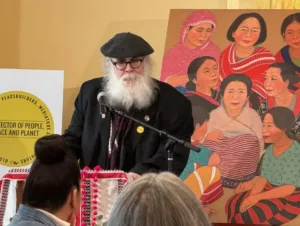
Central to Meyer’s work is a deliberate effort to center voices from the Global South. Rather than treating those voices as peripheral case studies, he has amplified them as essential interlocutors and leaders in defining peace theory and practice. This approach shifts power, enriches scholarship, and produces peacebuilding strategies rooted in local realities.
Meyer’s solidarity activism further demonstrates his commitment to those most affected by occupation and exclusion. He is an active participant in the Occupied People’s Forum, a coalition that unites civil society leaders from Ambazonia, Tibet, Kashmir, Kurdistan, Palestine, Puerto Rico, West Papua, and Western Sahara. Through this coalition Meyer advances mutual support for democratic, unarmed solutions to territories denied self-determination—prioritizing the rights, dignity, and agency of occupied peoples. As a co-founder of the Spirit of Mandela Coalition, he has helped to bring together leaders from traditions as diverse as the Southern Christian Leadership Conference and the Black Liberation Army, and tendencies from environmentalist, LGBTQ, Native America, and other movements.
His internationalism is rooted in sustained U.S.-based activism. As a teenager he resisted draft registration publicly; he later became the youngest National Co-Chair of the War Resisters League. Meyer served as Co-Chair of the National Council of the Fellowship of Reconciliation—the United States’ oldest interfaith peace organization—and continues to serve on the board of the AJ Muste Foundation for Peace and Justice. He is among a small number of activists who have played leadership roles in these historic pacifist organizations and the first since Muste himself to have been board chair of both WRL and FOR. In each role he has strengthened longstanding networks of pacifist and nonviolent activists, linking U.S. movements to global struggles for justice.
This nomination honors a rare combination of moral courage, scholarly excellence, and organizational acumen. Matt Meyer has consistently turned ideas into action—building institutions, nurturing leaders, and ensuring that the voices of those most impacted by conflict shape the paths to peace. IPRA’s work under his leadership has expanded peace education, rooted it in diverse contexts, and created durable international networks that advance nonviolent change.
We celebrate this nomination as an affirmation of values we share: principled nonviolence, solidarity with the marginalized, rigorous scholarship, and a deep commitment to democratic, peaceful solutions to conflict. We invite colleagues, partners, and supporters of peace around the world to join us in honoring Matt Meyer and IPRA for their extraordinary contributions to a more just and nonviolent future.