Join Peacemakers around the World in Building a Culture of Peace and Nonviolence!

ON NOVEMBER 10, 1998, the United Nations Responded to an appeal from every living Nobel Peace Prize Laureate by proclaiming the year 2000 to be "the Year for the Culture of Peace" and the years 2001-2010 to be the "International Decade for a Culture of Peace and Nonviolence for the Children of the World."

We live in a culture of violence. From the tragedy at Columbine High School in Colorado to the US bombing of Yugoslavia and Iraq to the fact that one out of every five US children lives in poverty while we spend billions upgrading our nuclear arsenal - violence surrounds us. It is time to stop the violence and start building a culture of nonviolence.

A culture of nonviolence values love, compassion, and justice. It rejects violence as a means of solving problems. Instead, it embraces communication, cooperative decision-making, and nonviolent conflict resolution. It ensures freedom, security, and equitable relationships. It promotes inner peace, personal transformation, and disarmament. FOR plans to kick off the Decade for a Culture of peace and Nonviolence in the Summer of 2000 in Washington, DC. Please see the page on The People's Campaign for Nonviolence for details.

The text of the UN Declaration and additional information about the declaration can be found here.

More information on the Web about the Nobel Laureate Appeal and the Decade of Nonviolence can be found at NobelWeb and on IFOR's Culture of Nonviolence Page.


For more information on the Decade for a Culture of Peace and Nonviolence, please click here to use our online order form

Read these Decade Challenge columns from Fellowship Magazine, by Janet Chisolm:

Constructive Program (Sep/Oct 2004)

Maximizing Participation (Jul/Aug 2004)

Reconciliation (Mar/Apr 2004)

THE CIRCLE OF TRUTHS:  Role Taking and Active Listening (Jan/Feb 2004)

Action-Reflection Communities (ARCs) (Nov/Dec 2003)

Creating Safe Space: a mission of nonviolent peacekeeping (Sept/Oct 2003)

A Community Resource: Women's Voices on War and Peace (May/June 2003)

From Violence to Wholeness: Nonviolence Training (Mar/Apr 2003)

A City Resolves to Build a Culture of Peace (Nov/Dec 2002)

Resolution in Context (Jul/Aug 2002)

Civic Groups, Campuses, and Congregations: Organizing Around the Decade in Texas - by Brenda Hardt (May/June 02)

Finding Security (Mar/Apr 2002)

Training for the Long Haul (Jan/Feb 2002)

Constructive Nonviolence - Starting Small (May/June 2001)

Children as a Barometer of Violence (Mar/Apr 2001)

Listening to the Children (Jan/Feb 2001)

Nonviolence Training in the Schools:Two Pioneers (Nov/Dec 2000)


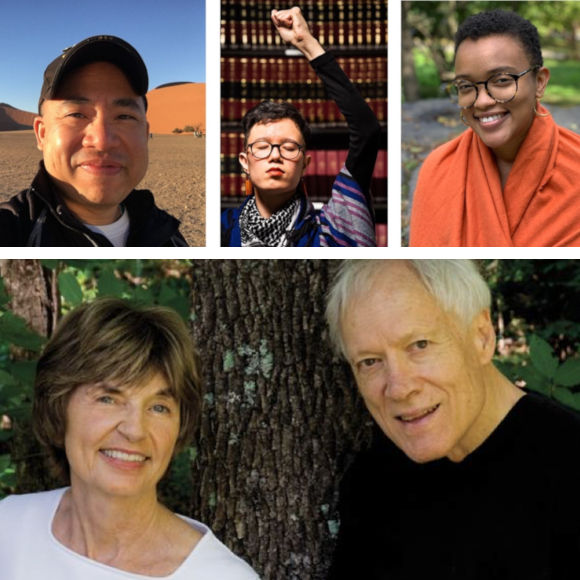
Group of Children

What YOU can do to build a culture of peace and nonviolence:

BE CREATIVE...Think of ideas that will awaken the imagination of your community. Here are just a few things that YOU can do:

AS A STUDENT... Connect with other students interested in social justice. Discuss a video. Research and do a presentation in your class about a specific case of nonviolence in history such as the 1980's People Power revolution in the Philippines, the Lavalas movement in Haiti, or student protests in China's Tiananmen Square. Request that your teachers teach conflict resolution and nonviolence principles. Start a peace studies program on your campus.

AS A PARENT... Learn constructive ways to deal with anger and pass this gift on to your kids. Make a family pledge to express feelings and resolve conflict creatively. Use the Family Pledge of Nonviolence. Urge your school to teach nonviolence and conflict resolution at every level.

AS A TEACHER ...Teach nonviolence in your classes through studying the Nobel Laureates' lives, a book on Gandhi, King, or Dorothy Day, or an interactive workshop on conflict resolution. Meet with other teachers who have the same interests and share your resources.

AS A SCHOOL ... Organize a Month of Nonviolence to learn about alternatives to violence, to address recent violent events in the community, to brainstorm nonviolent solutions, and to celebrate positive efforts that have succeeded. Schedule a series of videos on social justice issues such as militarism, racism, hate crimes, economic justice, youth empowerment, women's rights, and indigenous people's rights.

AS A CONGREGATION... Start a study circle in your congregation to explore nonviolence, racism, youth empowerment, the growing economic disparity, or homophobia. Join a Religious Peace Fellowship. Explore the spiritual dimensions of nonviolence in your tradition. Sponsor interfaith gatherings so congregations of differing faiths can learn about each other. Sponsor conflict resolution trainings for the congregation. Be an active voice against injustices in your congregation.

AS A LOCAL COMMUNITY MEMBER ... Form a coalition of local leaders from schools, religious institutions, local businesses, police departments, and interest groups to learn about nonviolence through workshops, videos, forums, nonviolence trainings, speakers. Meet with the town council to organize a town meeting to discuss problems relating to violence in schools and neighborhoods, and possible nonviolent solutions. Be sure to include individuals who represent the diversity of your community in planning, implementing, participating, and evaluating the event.

AS A PEACEMAKER ... Urge your groups to endorse the Decade of Nonviolence. Join the Abolition 2000 campaign to promote total nuclear disarmament. Join the Jubilee 2000 campaign and call for the cancellation of the Third World debt. Join Moratorium 2000, the movement to abolish the death penalty. Join efforts to lift economic sanctions on Iraq and to stop war and genocide in the Balkans.

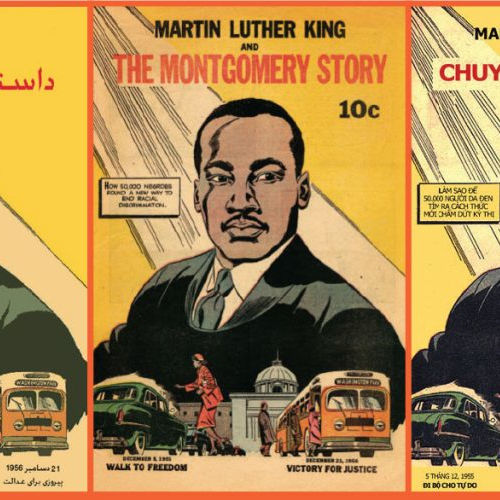
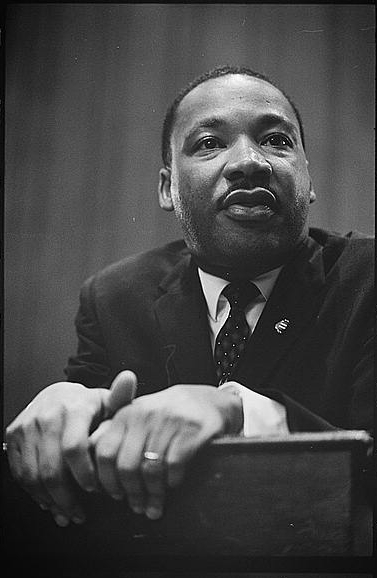
WHOEVER YOU ARE... Read works by Mahatma Gandhi, Martin Luther King, Jr., Dorothy Day, Cesar Chavez, Muriel Lester, and others. Imagine what the world would look like without weapons.

©2004 Fellowship of Reconciliation